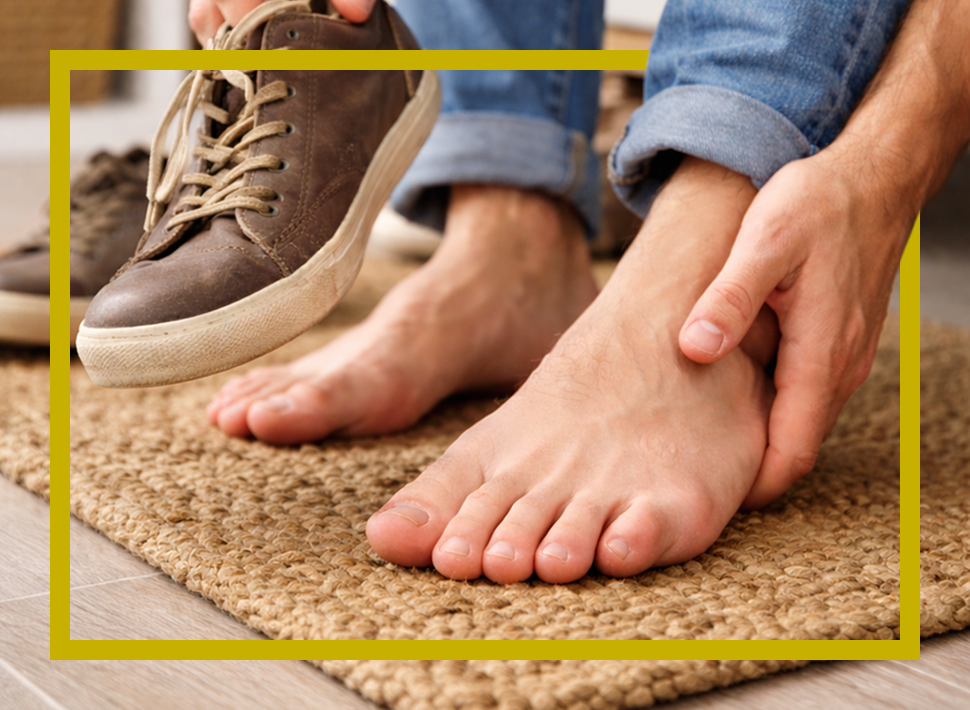
Sometimes all it takes is a small seam in the shoe and the skin starts to protest. Pressure sores on the foot are one of the most common foot problems, especially for people who walk or stand a lot. They usually develop where shoes rub, pressure builds up and the skin tries to protect itself – the result: calluses form. This can lead to painful, calloused areas. But if you pamper your feet a little, you can take the strain off them and counteract pressure points in a beneficial way.
What are pressure points on the foot?
The spots are caused by punctual, recurring pressure on the same area of skin on the foot. The skin strengthens as a form of self-protection – and forms a firm layer of callus. Hardly noticeable at first, these areas become thicker and more sensitive over time and can be painful when walking or standing. It becomes particularly unpleasant when the pressure point develops into a corn or even an open sore.
Causes: How do pressure sores develop on the foot?
In many cases, it’s simply down to the footwear. Too tight, too hard, too little room to move – and it rubs in one place, again and again. But other factors also play a role:
- Standing or walking for long periods without rest
- Foot deformities such as flat feet, splayfoot or flat feet
- Dry skin that is less elastic
- Lack of care or unsuitable socks
Pressure points on the foot caused by shoes are particularly common, as shoes are often not optimally adapted to the shape of the foot.
Symptoms: How to recognize pressure sores
Pressure sores on the foot are often characterized by a hardened, yellowish callus on areas of the skin that are under a lot of strain – such as the balls of the feet, heels or toes. The surrounding skin is often reddened or irritated. With increasing strain, unpleasant pressure pain can occur, especially when walking or standing for long periods. In severe cases, small cracks or superficial inflammation can occur, making everyday life even more difficult.
What helps against pressure sores on the foot?
If you want to remove pressure points on the foot, you should not resort to harsh remedies. Gentle care, relieving measures and regular attention often help more than radical solutions.
1. relief begins with the shoe
A soft footbed, sufficient space for the toes and breathable materials can directly relieve pressure points. Shoes with a hard toe cap or tight seams should be replaced with comfortable models. Small gel cushions or pads also help to prevent pressure points on the foot caused by shoes.
2. corneal care – gentle instead of sharp
A warm foot bath softens callused areas and prepares the skin for care. The excess skin can be carefully removed with a pumice stone or a fine callus rasp – not too much at once, but regularly in small steps. This keeps the skin supple without damaging it.
3. moisture for keratinized pressure points
Callused pressure points on the foot in particular need care that goes deeper. Spirularin® SR Cracked Skin Cream provides cracked, dry skin with intensive moisture and supports the natural skin barrier. Its moisturizing formula helps to restore the skin’s elasticity. This not only makes the skin softer, but also more resistant.
4. protection for sensitive zones
When the skin reacts sensitively to constant friction, protection and soothing are the best antidote. Spirularin® HF Gel contains the microalgae active ingredient Spiralin®, which supports regeneration and forms a gentle protective film on the skin. This can strengthen the skin, especially in areas that are exposed to daily stress – without any aggressive active ingredients.
When to see a professional?
Sometimes foot care and home remedies are not enough – then it’s time to seek professional help. If pressure points hurt, become inflamed or turn into corns, a podiatrist can provide targeted help. Regular foot checks are also advisable for chronic problems or pre-existing conditions such as diabetes – after all, prevention is better than cure.
Prevention: To prevent pressure points from developing in the first place
If you know your feet, you can prevent a lot. Make sure you wear comfortable shoes with a soft interior, wear seamless socks and treat your feet to regular care. A cream such as Spirularin® SR callus cream keeps the skin soft, elastic and less prone to callus formation. Check the soles of your feet regularly – small changes are often the first to show where something is out of balance.
Conclusion
If you recognize pressure points on the foot early and treat them gently, you can prevent small friction points from becoming painful calluses. No radical measures are required: A comfortable shoe, a little patience and the right care are often enough to relieve the skin and make it supple again. Products such as Spirularin® SR callus cream or Spirularin® HF gel can help to strengthen the skin and soothe stressed areas – discreetly, effectively and skin-friendly. So you can carry your feet through the day more easily again.
FAQ
How long does it take for a pressure sore to heal?
This depends on the severity. The skin often improves after a few days of gentle care. Calluses require more patience.
Can I continue to do sports despite the bruise?
Slight movement is usually possible. However, make sure you wear well-cushioned, comfortable shoes and avoid further friction.
Is walking barefoot good for pressure sores?
Walking barefoot on soft surfaces can relieve pressure on the feet. On hard ground, however, it can promote new pressure points.
Why do pressure sores always appear in the same place?
Because pressure is permanently generated there: Through gait, shoe shape or load. Insoles or pads can provide targeted relief.
What is the difference between a pressure mark and a corn?
Pressure sores are usually superficial and extensive. Corns often have a hard core that reaches deeper into the tissue and hurts at certain points.
Experten-Tipp entstand in Zusammenarbeit mit:

Patrick Günther
Patrick Günther completed his pharmacy studies in Hamburg and, after obtaining his licence to practise, worked for several years in marketing and sales in the pharmaceutical industry. In 2003, he took over ocean pharma, the company founded by his father in Reinbek near Hamburg in 1978. Together with his business partner, he patented the important processing and standardisation process for the microalgae active ingredient Spiralin® and developed a wide range of medical cosmetics and foot care products based on Spiralin®.