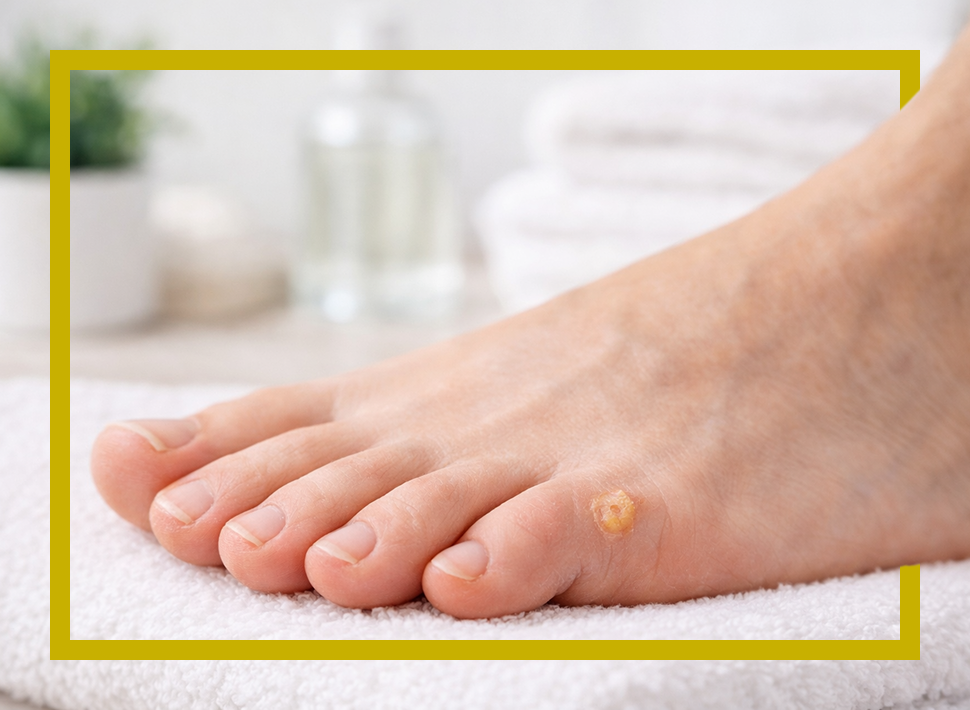
A little pain with every step, as if a tiny stone is stuck in your shoe – and yet there’s nothing to see? Then you should take a second look at your feet, because it is not uncommon for a corn to be the cause. These tiny pressure points usually develop unnoticed and only become noticeable when it pulls, burns or stings with every step. These stubborn corns often develop on the feet in particular. Now is the time to take the skin’s signals seriously and take early countermeasures.
What is a corn on the foot?
A corn on the foot (medical term: clavus) is a localized thickening of the cornea that forms as a result of prolonged pressure or friction. In the center is often a hard, cone-shaped core that presses into deeper layers of the skin like a thorn. This is why a corn hurts so intensely when walking or straining. They occur particularly frequently where the shoe rubs, for example on or between the toes and on the balls of the feet.
How do corns develop on the foot?
Typical causes of a corn under the foot are
- Tight or squeezing shoes that repeatedly affect the same area of skin
- Foot malpositions such as hallux valgus or splayfoot
- Increased callus formation due to friction or prolonged standing
- Pressure load due to incorrect loading or overweight
- Lack of foot care, leaving pressure sores undetected
Symptoms: How to recognize a corn on the foot
- Circular, yellowish thickening of the skin with clear boundaries
- Central, hard core that protrudes deep into the skin
- Sharp pain on exertion, e.g. when walking or wearing shoes
- Typically on the forefoot, between the toes or at prominent bone locations
Tips and tricks to counteract corns
If you suffer from corns on your feet, you know how sensitive our feet are to pressure and friction. In order to strengthen the skin permanently, it is not just short-term relief that helps. The following measures can help to specifically address the causes of corns under the foot.
1. the first step towards relief: reduce pressure
- Switch to comfortable, well-fitting shoes with enough room for your toes.
- Use silicone rings, felt pads or foam pads to relieve pressure on affected areas.
2. gently soften and care for calluses
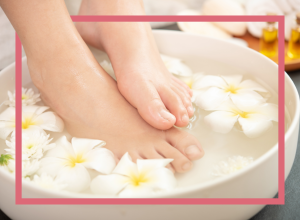
Callus care also plays a key role. Regular foot baths – for example with nourishing salt or oils – make the hardened skin more supple. The softened areas can then be carefully reduced with a pumice stone, a callus rasp or an electric callus remover.
Spirularin® SR chapped skin cream is suitable for particularly stressed areas of skin such as the heels or balls of the feet. It provides dry, cracked skin with intensive moisture, supports the restoration of the natural skin barrier and can help to improve the skin’s elasticity in the long term. Even severely calloused or stressed skin becomes more supple again without becoming greasy or weighed down.
3. corn plaster – targeted help with salicylic acid
Corn plasters are a tried and tested method of removing corns from the foot and softening the hardened core. Many of these plasters contain salicylic acid, a keratolytic (= corn-dissolving) ingredient. It ensures that the cornified skin is gradually removed without irritating the surrounding tissue. Corn plasters are available from drugstores or pharmacies.
Instructions for use:
- The foot should be cleaned and dried before use
- The plaster is applied directly to the corn – for 1-2 days depending on the product
- The softened skin can then be gently removed (e.g. after a foot bath)
- The application can be repeated for several days. Follow the manufacturer’s instructions
4. gentle care for stressed skin
Moisturizing, protective care is also recommended. Spirularin® HF Gel from Ocean Pharma is specially formulated for heavily stressed areas of skin:
- The microalgae active ingredient Spiralin® can strengthen the skin barrier.
- The cream supports the regeneration of the skin and provides it with moisture
- It is well suited for the care of skin areas that are frequently exposed to friction or pressure – i.e. where corns can develop on the foot
Spirularin® HF Gel can help to keep the skin supple and prevent new calluses – without irritating active ingredients, but with the power of microalgae.
5. professional help for stubborn cases
A medical chiropodist (podiatrist) can remove a corn professionally and painlessly. If corns occur repeatedly, an orthopaedic examination is also advisable in order to detect possible misalignments at an early stage and treat them in a targeted manner.
Preventing corns: tips & tricks
To prevent corns from forming, you should wear pressure-free, well-fitting shoes with a soft inner material to prevent friction in the first place. Regular foot care, especially the careful removal of excess calluses, keeps the skin elastic and resistant. You should also check the soles of your feet at regular intervals – especially if you have foot deformities or diabetes, as pressure points often go unnoticed. If pressure points are already known, special pads or gel cushions can help to reduce the strain and prevent new complaints.
Conclusion
A corn under the foot can feel like a small thorn that constantly pricks and irritates the skin. Such irritation not only robs you of the joy of movement, but also of a certain quality of life. With the right footwear, targeted pressure relief and a combination of gentle care and regenerating skin support – such as corn plasters, Spirularin® SR chafing cream and Spirularin® HF gel – you can not only relieve the pain, but also give your feet protection, strength and new lightness.
FAQ
What exactly is the difference between a corn and a callus?
A corn has a firm, painful core that presses deep into the skin. A callus, on the other hand, is rather broad, painless and superficial.
Can a corn disappear by itself?
In some cases yes, especially when the triggering pressure disappears. In most cases, however, the skin needs targeted support and care.
How long does it take for a corn to heal?
This depends on the extent and the care. With the right treatment, the skin can often improve significantly within one to two weeks.
Are corns contagious?
No, corns are mechanical and not infectious – unlike warts, for example.
Can I remove a corn myself?
Only with great care and never with pointed or sharp objects. It is better to use gentle methods such as plasters or care products.
Why do corns always appear in the same place?
Because pressure is permanently generated there – due to shoe shape, gait pattern or foot misalignment. A good combination of relief, care and, if necessary, orthopaedic advice is crucial here.
Experten-Tipp entstand in Zusammenarbeit mit:

Patrick Günther
Patrick Günther completed his pharmacy studies in Hamburg and, after obtaining his licence to practise, worked for several years in marketing and sales in the pharmaceutical industry. In 2003, he took over ocean pharma, the company founded by his father in Reinbek near Hamburg in 1978. Together with his business partner, he patented the important processing and standardisation process for the microalgae active ingredient Spiralin® and developed a wide range of medical cosmetics and foot care products based on Spiralin®.