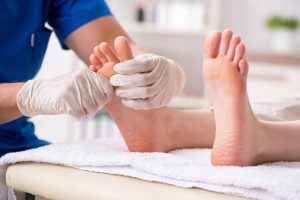

Our feet are in action every day and this is exactly where the importance of healthy feet becomes apparent. The needs of the feet change with increasing age or in old age. Regular foot care therefore plays a key role.
But it’s not just about the occasional application of cream or nail trimming. There is more to proper foot care in old age. Podiatrist Anke Niederau reveals exactly what in our interview. We ask and our experts answer.
How do our feet change with age?
Anke Niederau: As we get older, our feet also change. These changes are normal, but can cause discomfort if you don’t pay attention to them.
Typical changes are
- Size changes: Feet often become longer and wider as ligaments and tendons weaken and the arch of the foot flattens.
- A lowered arch: This reduces elasticity, which can affect gait and balance.
- Muscle weakness: The foot and leg muscles become weaker and this can increase the risk of falling.
- Displacement of the fat pad: The natural padding under the foot decreases, which can lead to pain when walking.
- Changes to the skin: The skin becomes thinner, drier and less elastic. As the ability to regenerate also decreases, this can lead to the formation of cracks and calluses, among other things.
- Joint problems: Osteoarthritis and other diseases restrict mobility.
- Changes to the nail: nails grow more slowly, become thicker or brittle, and fungal infections also occur more frequently.
- Circulatory disorders: Cold feet, swelling and poorly healing wounds are possible consequences.
Initial changes in the feet are usually noticeable through a change in foot shape or restrictions in mobility. This is often accompanied by pain. Healthy feet in old age, on the other hand, are characterized by stability, freedom from pain and a natural gait pattern.
My conclusion: regular care and check-ups are particularly important in old age in order to avoid complaints.
What should I pay particular attention to when it comes to foot care in old age?
Anke Niederau: Good foot care or foot treatment helps to prevent pain, infections and restrictions in mobility. Important measures for foot care at home include, for example
- Daily cleaning with warm water and mild soap.
- Dry thoroughly, especially between the toes. Moisture can lead to infections, e.g. with a fungus, especially after a warm foot bath. The warm water softens the skin, making it more susceptible to pathogens. For this reason, a foot bath should never be enjoyed for longer than 15 minutes.
- The right moisturizer to keep the skin supple and prevent cracking or dryness. Ingredients such as urea and Spiralin®help to bind moisture and strengthen the skin barrier. However, do not apply cream between your toes.
- Wear comfortable, suitable footwear with non-slip soles to avoid pressure sores, blisters and the like.
- Checkfeet regularly for redness, sores or pressure points.
- Have your nails trimmed and calluses removed, preferably by a podiatrist or cosmetic pedicurist. Shortening the nails can prevent problems such as ingrown nails. Otherwise, the correct treatment of ingrown nails, as well as the correct removal of calluses, is part of medical foot care.
This is particularly important for conditions such as diabetes. In this case, injuries often go unnoticed, which is why a regular check-up with a medical pedicurist is necessary and important. In old age, many people are no longer mobile, so foot care can also be carried out at home. Nobody has to go without podiatry treatment, and this also applies to residents in retirement homes.
Does the expert have an insider tip?
Anke Niederau: All skin types can be dehydrated, this applies to normal skin, combination skin and dry skin. The skin tightens in certain areas and lacks a healthy glow and suppleness. Fine lines appear on the skin, these are the “wrinkles of dehydration”.
My personal recommendation is to use Spirularin®products. They are highly nourishing and help to restore the skin’s natural barrier. They also provide lasting protection against bacteria, viruses and fungi.
In general, it is important to apply cream regularly according to the skin type using selected and well-known ingredients. Important criteria for the selection include
- Do not use Vaseline or milking fat products. This is because mineral fats are not absorbed into the skin but cover it.
- Use real fats or fat-like substances such as argan oil, avocado, jojoba and olive oil as well as shea butter, or alternatively beeswax and wool wax, so-called fat-like substances. Real fats consist of fatty acids and glycerine. They are absorbed by the skin but break down easily. They are animal or vegetable depot fats.
- Supply of moisture, for example via urea. Urea binds water in the upper layer of the skin and thus promotes a balanced supply of moisture.
Did you like the expert interview? You can find more tips from podiatrist Anke Niederau in our expert tips on ocean-pharma.de. If you would like to find out more about the difference between medical and cosmetic foot care , you can find the answers here in the link.