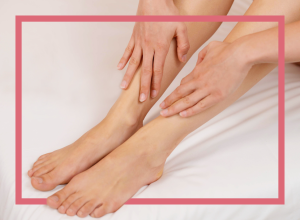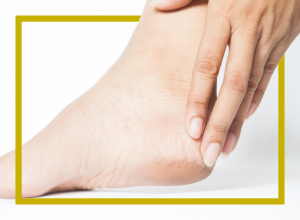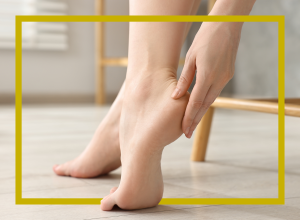

Over cold tiles in the morning, in tight shoes in everyday life, on long journeys with short breaks: our feet reliably carry us through the day. Only when the skin changes do we often realize the stresses and strains we put our feet through every day. The skin then becomes firmer, loses its suppleness and a thickened area slowly develops on the toe, which can be felt when walking. Calluses are initially an important protective mechanism of the skin. It develops where pressure, friction and strain come together. With targeted care, you can support and relieve your skin so that it quickly regains its elasticity.
Why do calluses develop on the toe?
Calluses are a protective reaction of the skin. Whenever an area is permanently exposed to pressure or friction, the body begins to thicken the skin layer. The aim is to protect sensitive tissue. On the foot, this mainly affects the balls of the feet, heels – or even the big toe.
Calluses often develop on the side of the big toe if shoes are too tight, toes rub against each other or the foot position is unfavorable. Dry skin, prolonged standing or malpositions such as hallux valgus can also encourage the formation of calluses.
Common causes:
- Pressure from tight or ill-fitting shoes
- Friction due to misalignment (e.g. hallux valgus)
- Dry skin without adequate care
- Walking barefoot on hard floors
- Mechanical stress due to sport or prolonged standing
What helps against calluses on the toe?
- Soak & remove regularly
A foot bath with lukewarm water and a dash of sea salt or camomile gently softens the callus. It can then be carefully removed with a pumice stone or file. Caution: The correct method is essential when removing calluses: never cut or remove too much at once, as this can irritate the skin and lead to even more callus formation. - Gentle care for the skin barrier
After a bath, the skin is particularly receptive. A nourishing cream that keeps the skin soft, relieves pressure points and supports the natural protective function is now helpful. Rich, moisturizing products that penetrate deep into the calloused skin without irritating it have proven particularly effective. Ocean Pharma offers two complementary care products: Spirularin® SR Cracked Skin Cream and Spirularin® HF Gel.
- Spirularin® SR chapped skin cream is particularly suitable for dry, hardened skin and the first cracks. It contains a high proportion of urea, which binds moisture and makes calloused skin layers noticeably smoother. The formulation is supplemented by nourishing ingredients such as panthenol and Spiralin®. The microalgae active ingredient covers the skin like a protective film, supports the skin barrier and helps to ward off external irritants. This allows the skin to regenerate better and remains more resistant to renewed keratinization.
- Spirularin® HF Gel is intended as a light support for everyday use or for skin areas that are regularly prone to calluses but do not yet show deep cracks. Here too, Spiralin® provides protection and balance, while moisturizing ingredients keep the skin soft without being greasy. The gel is quickly absorbed and is suitable for daily use.
Tip: After applying the care products, put cotton socks on your feet and leave the active ingredients to work overnight.
Removing calluses from the side of the big toe
Calluses usually develop on the side of the big toe where it presses permanently against the shoe or the neighboring toe. The skin reacts by thickening – often in spots, hard and noticeable when walking. Unlike flat calluses on the ball of the foot or heel, this area requires particularly careful treatment.
- Soak your feet in warm water for 10-15 minutes (e.g. with sea salt or nourishing oil).
- Only treat the affected area carefully with a pumice stone or a special callus file using light pressure and short movements.
- Then apply a protective care product such as Spirularin® SR chapped skin cream.
- Repeat daily until the skin feels noticeably smoother.
- Ensure there is sufficient space in the toe area, soft shoe materials and breathable socks. If necessary, toe spreaders or pressure-relieving pads can help to reduce lateral pressure.
Conclusion
Calluses on the toe are not a sign of a lack of care, but a natural reaction of the skin to pressure and strain. However, if it becomes too thick, it can make walking uncomfortable. Gentle care and the right approach can go a long way: regular soaking, careful removal and consistent moisturizing help to keep the skin supple and reduce new calluses. A careful approach and the support of rich care products, such as Spirularin® SR callus cream, are particularly worthwhile on sensitive areas such as the side of the big toe. However, if your feet are affected by severe callus formation, cracks or previous illnesses in the long term, you should seek professional advice.
FAQ
Why do calluses develop on the big toe in particular?
The big toe is under a lot of strain when walking and often bumps against the shoe. Calluses develop on the sides in particular due to pressure, friction or misalignments such as hallux valgus.
What is the difference between a callus and a corn?
Corns are usually flat and evenly thickened. A corn is punctual, often painful and has a hard core that presses inwards.
How often should calluses on toes be removed?
Regular and gentle is better than infrequent and intensive. Light removal once or twice a week is usually sufficient.
Does applying cream really help against calluses?
Yes, regular care keeps the skin elastic, reduces keratinization and prevents new formation, especially with products containing urea and moisturizing ingredients.
What to do if calluses keep coming back?
It is then worth checking the cause: Footwear, pressure points, foot position or lack of care often play a role.
Can calluses indicate a lack of moisture?
Yes, very dry skin tends to keratinize more quickly. Good moisturizing is therefore an important part of skin care.
Experten-Tipp entstand in Zusammenarbeit mit:

Patrick Günther
Patrick Günther completed his pharmacy studies in Hamburg and, after obtaining his licence to practise, worked for several years in marketing and sales in the pharmaceutical industry. In 2003, he took over ocean pharma, the company founded by his father in Reinbek near Hamburg in 1978. Together with his business partner, he patented the important processing and standardisation process for the microalgae active ingredient Spiralin® and developed a wide range of medical cosmetics and foot care products based on Spiralin®.